Independent Mattress Buying Guide
How to Evaluate Organic Mattresses: Materials, Certifications, and Questions to Ask
An “organic” label can sound reassuring, but it doesn’t tell the whole story. The useful details are underneath: which materials are certified, what the certification covers, how the mattress is built, and whether its feel and care needs suit your life. Here’s how to read the claims, ask better questions, and make a decision with confidence.
Published October 18, 2026
First, look past the word “organic”
Mattresses are layered products. A single model may include cotton fabric, wool batting, latex, foam, adhesives, thread, and a fire barrier. Those parts may come from different suppliers and follow different standards. So when a label says “organic mattress,” it’s fair to ask what, exactly, is organic: the cover, a specific filling, the latex, or the complete finished product?
That distinction isn’t a reason to dismiss organic materials. It’s a reason to get specific. A mattress made with certified organic cotton in its cover, for example, is not automatically made entirely from certified organic materials. Similarly, a company may describe latex as natural without establishing that it is organically certified. Natural, organic, chemical-free, and low-emission are not interchangeable terms.
Think of the label as a starting point rather than a verdict. A clear explanation of materials and documentation is more useful than a broad promise on a hangtag or product page. The aim is not to find a perfect mattress in the abstract. It is to understand what you’re buying and decide whether the construction matches your priorities, budget, comfort needs, and expectations.
Get familiar with the main materials
Organic mattresses commonly feature cotton, wool, and latex, though designs vary widely. Each material plays a different role, and its presence alone doesn’t tell you how a mattress will feel or perform. The amount, placement, construction, and quality of the components matter too.
Cotton: often used in covers and padding
Cotton may appear in the outer cover, quilted surface, or interior padding. It can feel familiar and breathable, but the word “cotton” doesn’t establish whether the fiber is organic. Ask whether the cotton is certified, which component it is used in, and whether the certificate applies to the finished textile or only to the fiber’s origin. Also ask how the cover is cleaned. A natural-fiber cover may be spot-clean only and may not be removable.
Wool: cushioning, moisture management, and a fire barrier
Wool is used in some mattresses as a cushioning layer or as part of the fire-barrier design. It can help manage moisture and contribute to a different feel from synthetic padding. But wool’s presence does not prove that the mattress as a whole is organic, and wool can compress over time. Ask where it sits in the construction, how much is used, how it is processed, and whether the seller can document any organic claim.
It’s also worth asking what the manufacturer means when it describes wool as “chemical-free.” That phrase can be imprecise. Request a plain-language explanation of the treatments or processing steps being referenced, rather than assuming the phrase means that no chemicals were used at any stage.
Latex: natural, blended, or synthetic
Latex can be made from rubber-tree sap, from synthetic materials, or from a blend. Natural latex is not necessarily certified organic, and a mattress described as “natural latex” may still contain other materials in its cover, adhesives, or fire barrier. Ask whether the latex is Dunlop or Talalay, whether it is natural or blended, and what certification applies to it. These production methods can result in different textures and construction choices, but the name of the method alone does not establish organic status or predict whether you’ll find the mattress comfortable.
Some mattresses use multiple latex layers that can be rearranged or exchanged. That feature may be helpful if you want to adjust firmness, but it does not remove the need to check the materials, costs, return terms, and warranty conditions.
Other components deserve attention, too
Ask about the entire bill of materials, not just the headline ingredients. A mattress can include a zipper, fabric backing, thread, adhesives, foam, or a separate fire-resistant layer. Find out which components are disclosed and whether any claim applies only to the main comfort materials. If you have a specific sensitivity or concern, ask the manufacturer for product-specific information rather than relying on a general statement about a material category.
Understand what mattress certifications can—and cannot—tell you
Certifications can give shoppers a way to verify particular claims, but different programs examine different things. One may focus on organic fiber processing; another may assess chemical substances or emissions. A certification is meaningful only in relation to its scope, its current status, and the product or component named in the documentation.
- GOTS: The Global Organic Textile Standard applies to qualifying textile products and their processing under the standard’s requirements. If a company mentions GOTS, ask which textile component is certified and request the certificate or product documentation. A certification for a fabric component should not be treated as automatic certification of every mattress layer.
- GOLS: The Global Organic Latex Standard concerns organic latex and related processing requirements. Ask whether the latex in the specific mattress is covered and whether the documentation identifies the product or supplier.
- OEKO-TEX STANDARD 100: This is a testing and certification program for harmful substances in textiles and components. It is not the same as organic certification. Check the label or certificate details to see what article or component is covered.
- GREENGUARD Gold: This certification relates to emissions of volatile organic compounds under specified testing criteria. It does not mean that a mattress is organic, nor does it describe every material attribute shoppers may care about.
These examples are not a ranking of mattress quality. A certification answers a defined question; it doesn’t promise that a mattress will feel comfortable, last a particular number of years, or be the right choice for someone with a medical condition. Nor should a company’s use of a familiar logo substitute for checking the certificate itself.
Ask for the certification name, certificate number where available, issuing organization, product or component covered, and validity status. Some programs maintain searchable directories; others provide documentation through the manufacturer or supplier. If the company cannot provide a direct document, ask what the claim is based on and whether it applies to the exact model you’re considering. Certification requirements and product listings can change, so verify current information rather than relying on an old brochure or a logo copied onto a web page.
Read the construction like a shopper, not a chemist
You don’t need to decode every technical term to compare mattresses. You do need a straightforward layer-by-layer description. Start at the top and work down: cover fabric, quilting or comfort layer, support core, and fire barrier. For each layer, look for its material, approximate thickness or weight when provided, and whether it is certified or treated as part of a specific claim.
Pay attention to vague descriptions such as “eco-friendly foam,” “pure latex,” or “all-natural materials.” These may be marketing language rather than formal specifications. Ask the seller to name the material precisely and explain any blend. If a detail is not available, note that uncertainty instead of filling it in with assumptions.
A product can be thoughtfully made and still be a poor fit for your body or bedroom. Firmness descriptions are not perfectly standardized, and the same mattress may feel different depending on body shape, sleeping position, foundation, and personal preference. If possible, test it under conditions that resemble how you actually sleep. For online purchases, read the trial policy carefully: note the minimum break-in period, return fees, pickup arrangements, and whether an exchange changes the warranty or trial terms.
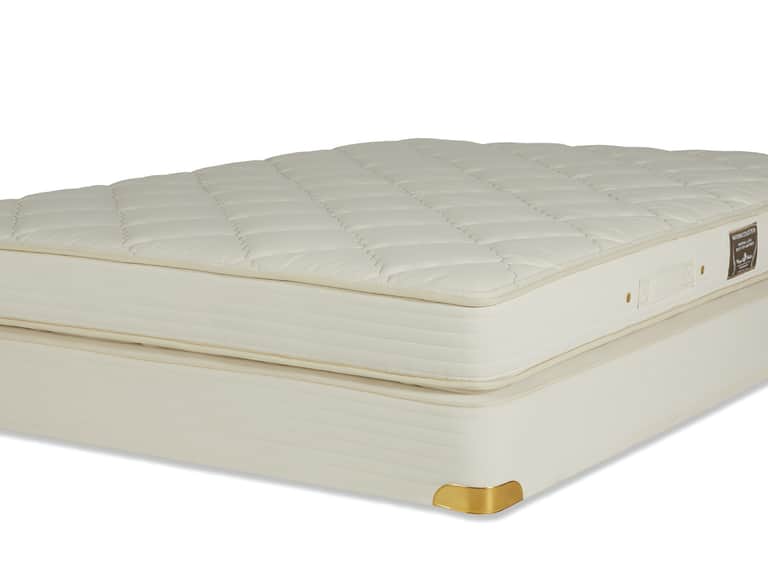
One example of the kind of specifications to scrutinize is the Savvy Rest Tranquility Latex Mattress. Its product description identifies two latex layers, an organic cotton cover, and an organic wool flame barrier, and describes the latex choices as Dunlop, Talalay, or a combination. Those are useful claims to verify at the product level: ask which configuration is being quoted, request documentation for the specific certified components, and confirm the current warranty and exchange terms. The example illustrates why a layer-by-layer breakdown matters; it is not a substitute for independently checking the claims or deciding whether the mattress fits your needs.
Questions worth asking before you buy
A confident seller should be able to answer practical questions without making you feel that you need a materials-science degree. You can bring this checklist to a showroom, send it in an email, or use it while comparing product pages.
- What are all the materials in each layer? Ask for a complete construction breakdown, including the cover, quilting, support core, fire barrier, and any adhesives or backing materials the company discloses.
- Which components are certified organic? Have the seller identify the exact component rather than describing the entire mattress as organic without qualification.
- Can I see current documentation? Ask for certificates or other supporting records that identify the product, supplier, or component and explain the scope of the claim.
- What does “natural” mean in this product description? Ask whether latex is natural, synthetic, or blended, and what the company means by other broad terms such as “chemical-free.”
- How is the fire barrier made? Ask what material is used and whether the company can explain how the mattress meets applicable fire-safety requirements. Don’t assume that a natural material description tells you the full construction.
- What is the cover-care routine? Is it removable? Is it washable? If not, what cleaning method does the manufacturer recommend? A mattress protector may help guard against spills and stains, but check that it is compatible with the mattress and doesn’t affect the warranty.
- What foundation does the mattress require? Confirm the support type, slat spacing, center support, and any restrictions for an adjustable base. A suitable mattress on an unsuitable foundation may perform differently or affect warranty coverage.
- What are the trial, exchange, and return rules? Get the time limits, fees, condition requirements, pickup or shipping arrangements, and any one-time exchange charges in writing.
- What does the warranty actually cover? Request the full document. Check the term, exclusions, sagging or indentation threshold, required foundation, and whether transportation costs fall to you.
- How are materials sourced and assembled? If country of origin, supply-chain practices, or local manufacturing matters to you, ask for a specific answer. “Made in” language may refer to final assembly and may not describe where every ingredient originated.
Balance material ideals with comfort and practical realities
Organic materials may be important to you, but they are only one part of a mattress decision. Comfort, support, durability, temperature preferences, size, price, and the return policy all deserve a place in the comparison. A beautifully documented mattress is not automatically the right one if it causes pressure discomfort or does not work with your bed frame.
Consider your sleep position and the feel you prefer, then compare the actual construction of models within your budget. If you share a bed, talk through motion, edge feel, and whether each person needs a different firmness. Customizable layers can offer flexibility, but ask how much adjustments or replacements cost. A more expensive option may offer a longer warranty or a different material mix, but neither price nor warranty length is a reliable shortcut for predicting how comfortable or long-lasting it will be in your home.
Care is part of ownership. Some natural-material mattresses have covers that should not be removed or machine-washed. Follow the maker’s instructions, use an appropriate protector if recommended, and avoid rotating or flipping a mattress unless the model is designed for it. These details can affect day-to-day convenience as much as the fabric or filling does.
A simple way to compare your shortlist
Before visiting a store or placing an order, make a small comparison table for two or three models. Use the same questions for each one, and keep answers factual. This makes it easier to notice when one company provides precise documentation and another relies on broad claims.
- List each layer and its material.
- Record which components have certifications and what each certification covers.
- Note firmness options, mattress height, and required foundation.
- Write down care instructions and whether the cover is removable.
- Compare trial, exchange, return, shipping, and warranty terms.
- Mark unanswered questions so you can follow up before buying.
Don’t let a long list of labels make the decision feel more complicated than it needs to be. You are looking for evidence that supports specific claims, plus a mattress that feels suitable and comes with terms you understand. If a seller answers clearly and provides the requested documentation, that gives you a firmer basis for comparison. If an answer remains unclear, treat it as an unknown—not proof of wrongdoing, but not proof of a claim either.
Red flags—and reassuring signs
Be cautious when a seller presents “organic” as a blanket description but cannot say which materials are covered. Other reasons to pause include certification logos with no supporting details, refusal to provide a layer breakdown, or assurances that a mattress is free of every chemical without a clear definition or evidence. Claims about health outcomes also deserve care: a mattress label alone cannot guarantee better sleep, prevent allergies, or treat a medical condition.
Reassuring signs are more modest and more specific. A seller distinguishes organic from natural and emissions-tested materials, identifies the scope of each certificate, answers questions about construction, and shares the warranty and return policy before checkout. Clear answers may not settle every preference, but they make it easier to compare choices without relying on a glossy headline.
The bottom line: buy the mattress you can understand
Evaluating organic mattresses doesn’t require chasing a perfect label. It requires knowing what the label is actually attached to. Identify the materials in every layer, confirm which claims are independently documented, and distinguish organic certification from testing for substances or emissions. Then bring comfort, care, warranty, foundation compatibility, and return terms into the same conversation.
The best buying decision is the one you can explain to yourself: what the mattress is made of, what is verified, what remains uncertain, and why the design suits your needs. Ask direct questions, save the answers and documents, and take the time to compare. A little homework can turn an appealing promise into an informed choice—and help you bring home a mattress that feels right for more than its label.