Independent mattress buying guide
Inside Vispring’s Pocket-Spring Craft: What Buyers Should Know
A mattress can look beautifully finished and still leave important questions unanswered. For Vispring pocket-spring models, the story is in the layers: how springs respond, what sits above them, and whether the whole construction suits the person who will sleep on it.
A practical, non-commercial guide to understanding spring arrangement, upholstery, comfort and the details worth checking before you decide.
What “pocket spring” actually means
In a pocket-spring mattress, individual metal coils are enclosed in fabric pockets. Those pockets are arranged in a supportive layer beneath the upholstery. Because the coils can move more independently than springs joined into a single open unit, the surface may respond more locally to pressure. When a shoulder or hip presses down, nearby springs can compress without requiring the entire spring system to move in exactly the same way.
That description is a starting point, not a guarantee of a particular feel. The experience depends on more than the fact that a mattress contains pocket springs. Coil shape, wire characteristics, spring height, number of layers, arrangement and the materials above the springs all influence how the bed yields and recovers. A pocket-spring label tells you something about construction, but it cannot tell you on its own whether the mattress will feel soft, firm, buoyant or supportive to you.
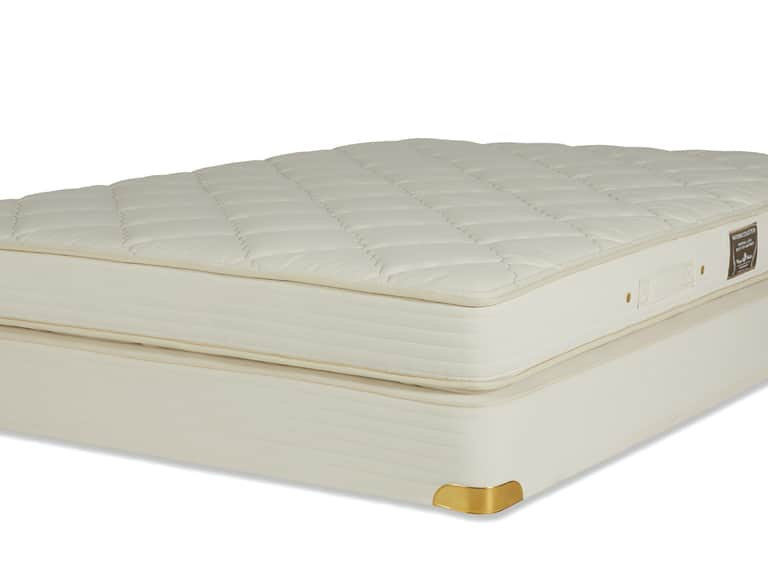
Vispring is associated with traditional pocket-spring construction and layered upholstery. A representative example is the Vispring Masterpiece Superb, whose listed construction includes three layers of hand-nested calico pocket springs and several distinct natural upholstery fillings. Those product details can help illustrate how a complex mattress is assembled, but they should be treated as model-specific information rather than a description of every Vispring mattress.
Why spring count is only one piece of the story
Spring counts attract attention because they look precise. A large number can sound like a straightforward measure of quality, but it is not a direct score for comfort or support. Counts may be reported for different sizes, and a figure can describe one layer or multiple layers. Before comparing two numbers, check that they refer to the same mattress size and the same method of counting.
Even when the figures are comparable, spring count does not explain the full construction. A mattress with more coils is not automatically a better match for every sleeper. The feel also depends on the springs’ dimensions and response, how they are arranged, what other layers are present, and how those layers work together. Upholstery can soften the initial contact, while the spring system contributes to the deeper response beneath it.
The Masterpiece Superb’s product description, for example, specifies a total of 3,996 springs in a king size across three layers of hand-nested calico pocket springs. That is useful information to record, but it does not settle the buying question. A shopper still needs to understand the surrounding materials and, most importantly, try the mattress in a position and for long enough to form a considered impression.
Think of a spring count as a specification to clarify, not a verdict. Ask what the number covers, whether it changes by size and how the spring configuration is intended to affect the feel. Then compare that information with what you experience, rather than assuming that a higher figure must mean more comfort or longer life.
How individual springs respond to pressure
Individually wrapped coils are designed to respond in a more localized way than coils mechanically linked across a unit. That can be relevant when two people share a bed, since movement on one side may be less likely to travel across the whole surface. It may also help the mattress respond differently beneath areas of concentrated pressure. The outcome varies by design, and no construction eliminates movement entirely.
It is useful to distinguish pressure response from support. A mattress may give way under a shoulder or hip and still support the body overall; conversely, a surface that feels immediately firm may not feel comfortable in a person’s usual sleeping position. Support is about how the surface works with the sleeper’s body and posture, not simply how resistant it feels when pressed by a hand.
Body weight can affect the way a mattress compresses. A lighter sleeper may not engage the layers in the same way as a heavier sleeper, while a person with more weight concentrated around the hips may notice a different balance of cushioning and support. These are not reliable shortcuts to a firmness rating, however. Build, proportions, mobility and personal preference all matter, so individual testing is more informative than general assumptions.
Sleeping position changes the pressure points a shopper should pay attention to. Side sleepers often notice whether the shoulder and hip can settle comfortably without a sense of pinching. Back sleepers may focus on whether the lower back feels comfortably supported. Stomach sleepers may want to notice whether the middle of the body sinks more than feels natural. These are observations to guide a trial, not medical conclusions or universal rules.
The upholstery layers shape the first impression
Above the springs sit the upholstery layers: fillings and cover materials that affect the feel at the surface and the way the mattress manages warmth and airflow. A shopper may notice the cushioning before noticing the coil system beneath it. That first impression matters, but it is only one part of the experience. The deeper response becomes clearer as you lie in your usual position and allow the body to settle.
In the listed construction of the Masterpiece Superb, the cover combines cashmere, silk and viscose. The upholstery description includes hand-teased Real Shetland Wool blended with cashmere, alpaca and silk, plus long-stranded Austrian Moosburger horsetail. It also identifies blended Real Shetland Wool and organic cotton on both faces. Such descriptions provide a view of the materials named for this particular model; they do not establish a universal standard for the brand or demonstrate, on their own, how every sleeper will experience the mattress.
Different fillings can have different textures and characteristics, but marketing language should not replace practical questions. Ask where each material sits, how much of it is used, whether the mattress has the same construction on both sides and what care the maker recommends. If a description uses terms such as “breathable,” “natural” or “temperature regulating,” ask what those claims refer to in the finished mattress and look for clear, specific information.
Layering also means that two mattresses with similar spring counts may feel quite different. A more substantial comfort layer can change how quickly pressure is felt at the surface; a firmer or thinner upholstery arrangement may make the spring response more apparent. The combined design—not one headline material—determines the experience. That is why a showroom trial and a complete specification sheet are more useful than a single feature in isolation.
Firmness is personal, not a universal measurement
Firmness labels are convenient, but they do not operate as a perfectly consistent scale from one maker to another. “Medium” in one range may not feel identical to “medium” elsewhere. A mattress can also feel different depending on the sleeper’s weight, shape and posture. Treat the label as a guide to the maker’s intended positioning, not a substitute for testing.
When you lie down, give yourself time to notice several things. Does the surface feel comfortable at first contact? After a few minutes, do you feel supported in your usual position? Is there pressure at the shoulders, hips or other areas? Can you change position without feeling trapped or having to exert unusual effort? If you share a bed, test it together and pay attention to both comfort and movement across the surface.
Try to reproduce your ordinary sleep posture rather than sitting on the edge or lying briefly on your back if that is not how you sleep. A quick showroom impression can be useful for rejecting an obvious mismatch, but it may not reveal how a layered mattress feels after you have settled into it. Ask about the retailer’s trial arrangements, return conditions and any charges or exclusions before committing.
Firmness preference is not the same as a diagnosis or a promise of better sleep. If you have persistent pain or a health concern, a mattress purchase should not be treated as a replacement for appropriate professional advice. For everyday comparison, though, a clear record of what feels comfortable in your own positions is a practical way to keep the decision grounded.
Construction details to ask about
When comparing Vispring options—or any pocket-spring mattress—ask for details in plain language. A complete answer should help you understand what is inside the mattress and how to live with it, not simply repeat claims about craftsmanship or luxury. If a specification is unclear, request clarification in writing so you can compare like with like.
- Spring count: What mattress size does the stated count describe, and does it include every spring layer?
- Spring arrangement: How many spring layers are used, and how are they arranged within the mattress?
- Spring details: What information is available about spring type, dimensions and response?
- Upholstery: Which materials are used, where are they located, and are quantities or layer descriptions available?
- Comfort options: Is the model offered in different firmness choices or configurations, and what does each option mean?
- Two-sided use: Is the mattress designed to be turned, rotated or used on one side only?
- Care: What routine care does the maker recommend, and are there specific requirements for the base?
- Warranty: What conditions, exclusions and evidence requirements apply?
- Trial and delivery: What are the return terms, delivery arrangements and any associated fees?
These questions are especially useful when a product description emphasizes material names but gives limited information about construction or care. A transparent answer makes it easier to assess whether the mattress suits your needs and whether its upkeep fits your household.
A practical in-store testing checklist
For a more useful comparison, slow the process down. If possible, test each candidate in the same conditions and take notes immediately afterward. Small details can blur together when you have tried several models in one visit.
- Start with your normal position. Lie down as you would at home, using your usual pillow if the store allows it.
- Pause before judging. Give your body time to settle and notice both surface cushioning and the response beneath it.
- Check pressure points. Notice whether your shoulder, hip or other contact areas feel comfortable, not just whether the top feels soft.
- Change position. See how easily you can turn and whether the surface feels stable when you move.
- Test as a pair, if relevant. Have both sleepers lie down, move and settle into their usual positions.
- Read the specification. Record the model, size, spring information, upholstery details and firmness option.
- Confirm the practical terms. Ask about the base, delivery, trial period, returns, warranty and care before making a decision.
A checklist will not make the choice automatic. Its value is that it separates memorable showroom language from details you can verify and compare. Comfort remains personal; the checklist helps you understand what you are choosing.
Durability and care: seek specifics, not promises
Traditional construction and named natural materials may be appealing, but they are not a guarantee of a particular service life. Longevity depends on the complete mattress, the foundation it rests on, how it is used and the care instructions supplied by the maker. A high price or a long list of materials should not be treated as proof that the mattress will remain comfortable for a set number of years.
Ask how often the mattress should be rotated, whether it can be turned over and whether those instructions vary by model. Some mattresses have different top and bottom constructions, while others may be designed for use on both sides. Do not assume that turning is appropriate without checking. Follow the maker’s guidance for the exact model and preserve the documentation in case you need to refer to the warranty.
The base matters, too. Confirm that your bed frame or foundation meets the mattress requirements, including any guidance on support spacing or compatibility. A suitable support system helps the mattress function as intended. If you plan to use an adjustable base, verify that the specific mattress is approved for that use rather than relying on a general assumption about pocket springs.
Warranty coverage and real-world durability are different questions. A warranty usually sets conditions for defined defects and may exclude normal changes in feel, misuse or an unsuitable foundation. Read the full terms, including how to make a claim and what documentation is required. Clear care and warranty information is a meaningful part of the buying decision, not administrative fine print.
How to compare Vispring models without getting lost in the details
When comparing models in a range, make a simple table with a row for each candidate and columns for spring construction, upholstery materials, available comfort options, care instructions, base compatibility and warranty terms. Include the same mattress size wherever possible. This makes it easier to see which differences are documented and which need a follow-up question.
Separate facts from impressions. “Three spring layers,” if stated for that model, is a specification. “Felt supportive on my side” is your experience. Both matter, but they answer different questions. The specification helps you understand construction; your trial helps you decide whether the result suits you.
Do not assume that more layers, more spring count or more elaborate materials automatically make a mattress better for your body. Those details may help explain why two products are built differently, but personal comfort and practical terms still deserve equal attention. A mattress that feels excellent in a showroom but is difficult to care for or unsuitable for your base may not be the right overall choice.
Finally, make room for the less glamorous parts of the decision: the total price, delivery access, setup, old-mattress removal, return fees and any waiting period before a comfort exchange. These terms can vary by retailer and should be confirmed directly. A calm, informed decision is more dependable than a purchase driven by urgency or prestige alone.
The takeaway for buyers
Vispring pocket-spring construction is best understood as a system, not a spring-count headline. Individually wrapped coils can respond to pressure locally, while spring arrangement and upholstery layers shape how that response feels. Body weight, sleep position and personal firmness preference influence the experience, which is why clear specifications and a realistic trial matter.
Use product descriptions to generate better questions: what does the count include, what materials sit above the springs, how should the mattress be cared for, and what does the warranty actually cover? Then test the mattress in your ordinary sleep positions and compare the answers with your own comfort. The result is a more grounded purchase—one based on construction you can understand and a feel you have personally assessed, rather than a promise or a number alone.